
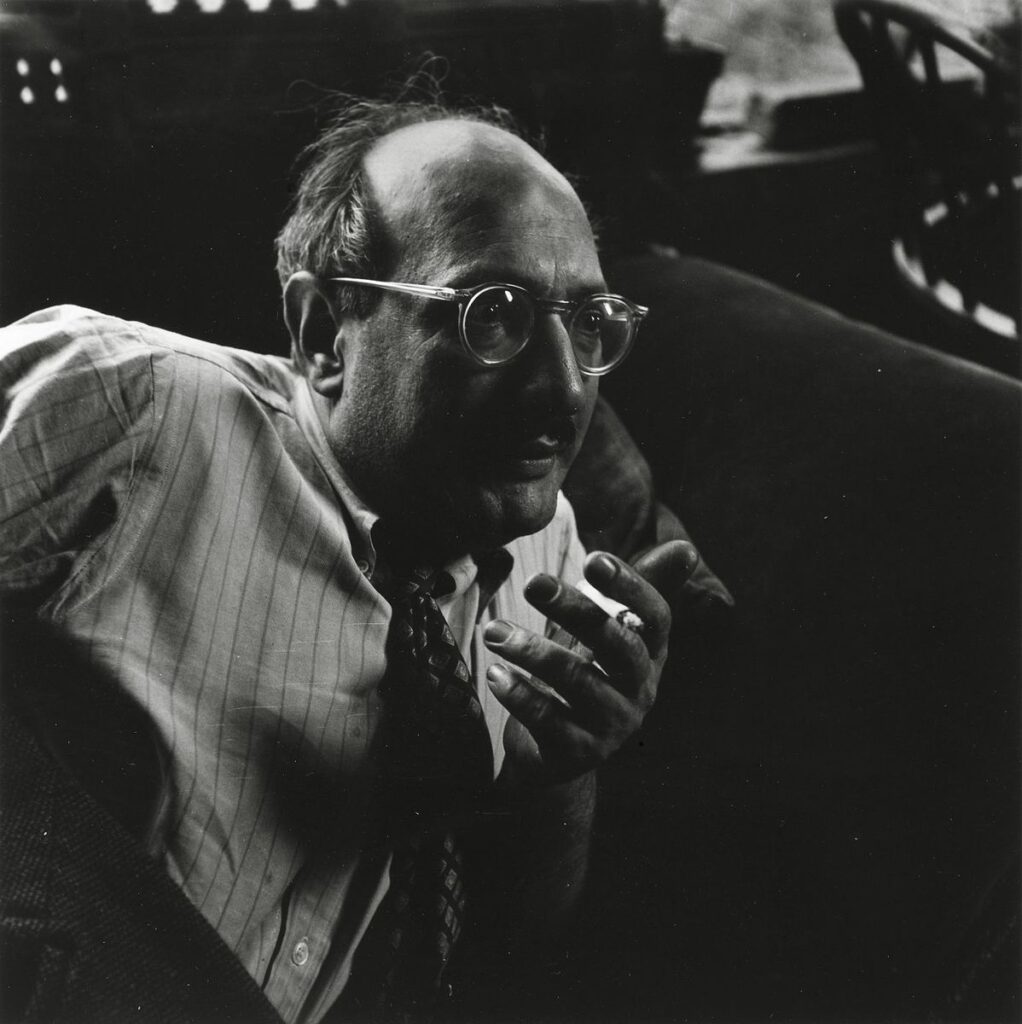
Mark Rothko: The Man Who Painted the Human Condition
Few artists in the 20th century changed the emotional temperature of painting as profoundly as Mark Rothko. More than an abstract painter, Rothko saw himself as a dramatist, and canvases like vast stages where color—soft, trembling, expansive—became an actor. To stand before one of his works is not merely to look at art but to feel it.
This article explores Rothko’s artistic evolution, his personal struggles, the philosophy at the heart of his work, and the tragedy of his final years.
Early Life: From Dvinsk to New York
Born Markus Yakovlevich Rothkowitz in 1903 in what is now Latvia, Rothko emigrated to the United States with his family at age ten. The move was driven by antisemitic persecution, a shadow that never fully left him.
He grew up in Portland, Oregon, excelling academically and absorbing the immigrant experience with all its anxieties and aspirations. By age 20, he had moved to New York, originally intending to study at Yale before dropping out, declaring the school an enclave of “bourgeois snobbery.”
What mattered to him was the city itself—its creative electricity, its possibility.
Becoming an Artist: Searching for a Voice
Rothko’s earliest works were figurative: city scenes, subway riders, portraits tinged with loneliness. He studied at the Art Students League, where instructors like Max Weber introduced him to modernist ideas.
But throughout the 1930s and 40s, he felt increasingly constrained by realism. Rothko and peers such as Adolph Gottlieb and Barnett Newman sought ways to express universal human experience—not through narrative, but through shape, myth, and ultimately color.
The shift toward abstraction
By the mid-1940s, ancient myths and psychological archetypes influenced Rothko, who believed myth offered timeless emotional truths. Gradually, figures dissolved into gestural forms, then into floating chromatic planes. Rothko had found his language.
The Rothko Style: Color as Human Drama
At the height of his career, Rothko developed the unmistakable format:
large vertical canvases, soft-edged rectangles of color that hover, pulse, or shimmer.
These were not decorations. Rothko insisted on the following:
- Large scale so the viewer feels “inside” the painting
- Subtle layering of pigments to create a sense of breathing luminosity
- Intimate viewing distance—he recommended standing about 18 inches away
- Reduced palette, especially in his darker later years
His aim?
To create an emotional experience bordering on the spiritual. Rothko believed that color could express the entire spectrum of human emotion—joy, tragedy, transcendence, despair—without a single figure or story.
He once said:
“I’m not interested in color. I’m interested in expressing basic human emotions—tragedy, ecstasy, doom.”
The Personal Man Behind the Paintings
Despite the glowing canvases, Rothko wrestled continuously with gloom, self-doubt, and feelings of alienation. He was:
- Intensely introspective
- Philosophically driven
- Emotionally volatile
- Often agonizingly self-critical
Rothko married twice and had two children with his second wife, Mell. While he adored them, he struggled with the demands of family life versus the consuming nature of his work.
Friends and assistants described him as both deeply generous and fiercely difficult—warm in one moment, caustic in the next.
Triumphs and Conflicts: The Seagram Murals
One of the most famous episodes in Rothko’s life was his 1958 commission for the Four Seasons restaurant in New York’s Seagram Building.
He accepted the lucrative commission—then turned against it. After creating a series of dark, imposing maroon-and-black murals, he visited the elegant dining room and was repulsed by its opulence.
He withdrew from the project, stating:
“I hope to ruin the appetite of every son of a bitch who ever eats in that room.”
The murals were never installed and were later dispersed among major museums.
The Later Years: Darkness Descends
As Rothko aged, his health deteriorated—both physically and emotionally.
- He suffered from depression.
- His marriage collapsed.
- His palette darkened dramatically into near-blacks, maroons, and deep purples.
- He worked obsessively, producing the somber yet monumental Rothko Chapel paintings.
His doctors warned him to stop drinking, stop smoking, and stop working in toxic studio conditions. Rothko did none of these.
Death and Legacy
On February 25, 1970, Rothko died by suicide in his New York studio. He was 66.
His death shocked the art world and immediately cast his later paintings in a tragic, mythic light. But Rothko’s legacy was already secure: his canvases had transformed the possibilities of abstraction.
Today his work is exhibited in near-sacred environments—museums dim the lights, provide benches, and create meditative spaces. The intent is clear: Rothko does not want viewers to look. He wants them to feel.
Why Rothko Still Matters
Mark Rothko stands as a painter of emotion rather than form, of experience rather than depiction. In an age overwhelmed by images, his work reminds us that abstraction can be profoundly human.
He showed that art need not tell a story to reveal one.
That color alone can break your heart.
That silence can sometimes speak louder than words.
Cover image: Consuelo Kanaga (American, 1894-1978). Mark Rothko, Yorktown Heights, ca. 1949. Gelatin silver photograph, 10 x 8in. (25.4 x 20.3cm). Brooklyn Museum, Gift of Wallace B. Putnam from the estate of Consuelo Kanaga, 82.65.367. This image at the time of publishing this article is considered to have no known copyright restrictions by the institutions of the Brooklyn Museum. Should any copyright restriction arise we will immediately comply with the copyright requirements or remove the image from our website.